Twitch vs. YouTube: Where to Stream as a Small Streamer (2026 Guide)
Small creators feel the Twitch vs. YouTube choice the most. Both platforms dominate live streaming right now. But they reward different habits.
YouTube is algorithm-first.
Twitch is community-first.
That changes how a new channel gets seen. Visibility is the real bottleneck early on. So picking the right streaming platform early matters.
Twitch can be the fastest start for beginners, once ranking clicks. That is even more true with stable live viewers and active chat.
➡️ Before choosing, you can test your stream presence using Viewbotter’s free trial. Get 25 viewers + 25 chatters for 30 minutes.
Quick Answer - Twitch vs YouTube for New Streamers
For most brand-new streamers, Twitch is the better choice for fast live momentum.
Twitch is built around live streaming, not video uploads. People open Twitch with the intent to watch someone live, chat, and hang out. That matters when starting from zero. Category browsing, raids, and chat culture give small streams a real chance to be seen during a session.
YouTube works differently. It shines after the stream ends. Streams can be pushed later like regular YouTube videos, which helps with long-term discovery. The trade-off is weaker live energy. New creators often struggle to hold viewers while competing with millions of pre-recorded videos.
Platform Overviews
Twitch and YouTube feel similar on the surface. Both let creators go live, talk to chat, and build a fanbase. But their core design is different, and that shapes growth.
What Is Twitch?
Twitch is a live-first streaming service built around real-time viewing. People go there to watch a streamer live, not later. Discovery mostly happens inside categories while the stream is live. Twitch also leans into creator tools, plugins, and stream culture.
What Is YouTube Gaming?
YouTube Gaming sits inside YouTube, alongside everything else. That includes pre recorded videos, shorts, and video uploads.
It is great for highlights, evergreen clips, and long VOD libraries. Lives can compete with millions of YouTube videos at the same time. That can reduce live viewer retention for small creators. Still, a strong live can get pushed after it ends.
Twitch vs YouTube Feature Comparison Table
The easiest way to compare Twitch vs. YouTube is by outcomes. Small streamers care about being found, keeping viewers, and earning early.
| Feature | Twitch (Advantage) | YouTube (Neutral/Limited) |
|---|---|---|
| Live discoverability | Category browsing and ranking | Better for VOD discovery |
| Community building | Dedicated gaming community and chat culture | Chat feels secondary |
| Growth curve | Can spike fast with visibility | Slow and steady with videos |
| Monetization speed | Affiliate can happen quickly | YouTube partner program takes longer |
| Viewer retention | Strong live habit and culture | Lives compete with videos |
| Creator tools | Open API and plugins | Fewer deep integrations |
| Content lifespan | Live-first, VOD less central | Streams can live like videos |
| Revenue focus | Subs, bits, ads, Prime habit | Ad revenue plus memberships |
Discoverability - The #1 Deciding Factor
Discoverability is the big divider between Twitch and YouTube.
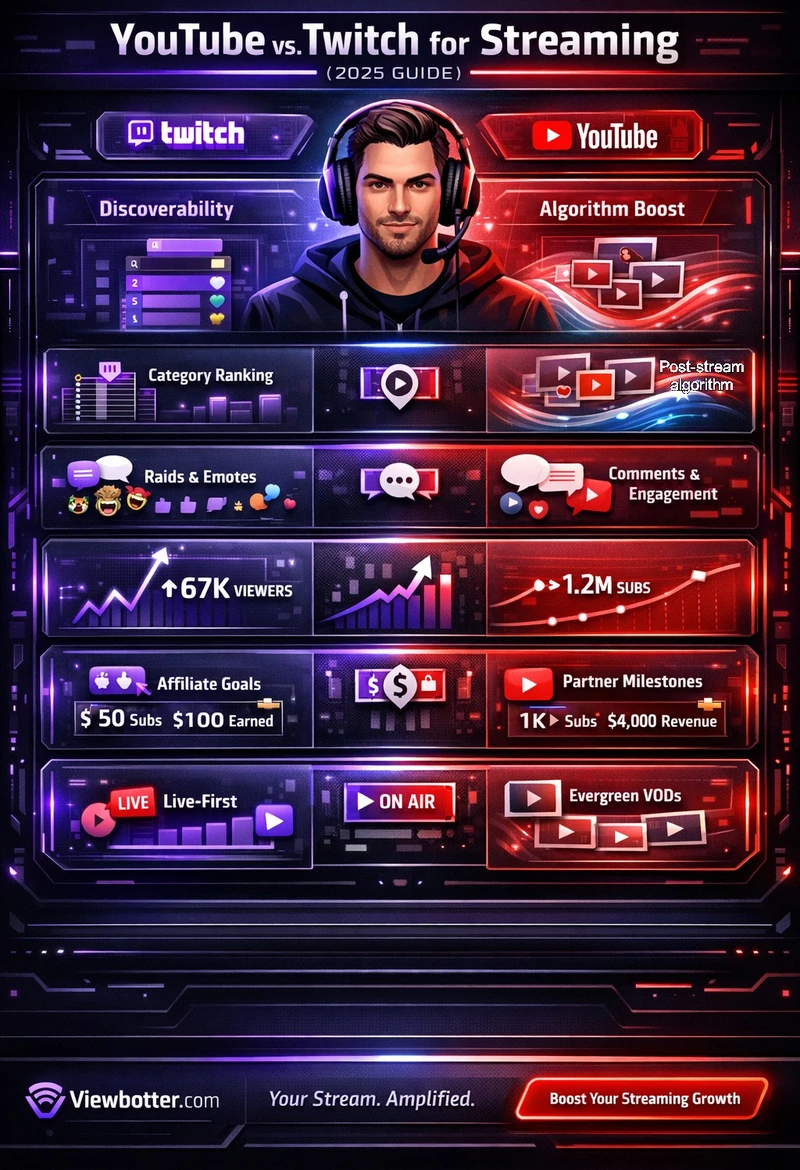
Twitch is first and foremost a live streaming platform. A channel gets discovered mainly when it is live. Twitch ranks streams inside categories by viewer count. So small streamers often start at the bottom. A short ranking jump can change everything fast. Even 20 to 30 minutes higher in a category can bring real clicks.
YouTube is different. It can push a good stream after it ends. It can show that stream in home feeds later. Shorts and long videos can also feed the live stream over time.
This is why Twitch feels brutal from zero. And why YouTube can feel patient, but slow, at first.
➡️ Many streamers use Viewbotter to simulate those first 25-100 viewers. Ranking higher = more real organic viewers joining.
Monetization - Which Platform Pays Small Streamers Faster?
Twitch monetization can start earlier. The Twitch Affiliate bar is clear and realistic. It needs 25 followers, 4 hours streamed, 4 days streamed, and 3 average viewers. Many creators hit that quickly with consistency.
Beyond that sits Twitch Partner. Partner status requires meeting the Path to Partner goals, including multiple streams averaging around 75 viewers over a 30 day period, with minimum 25 hours streamed. But you can see the differences between Twitch Affiliate and Twitch Partner in our other guide.
YouTube takes longer for most new creators. A newer tier starts at 500 subscribers and 3,000 hours of watch time. That tier does not unlock ad revenue. Full ads still need 1,000 subscribers and 4,000 watch hours.
YouTube pay can shine later, especially on ads. A stream VOD can keep earning like any other upload. Twitch is more live-dependent for income early on.
➡️ Viewbotter helps new streamers reach Affiliate requirements faster and look active/stable during early streams.
Community & Engagement - Twitch Dominates Here
Twitch streaming is built for real-time community loops. Chat is the centre of the experience. Raids, streamer culture, and live habits keep people around.
Twitch also supports deep creator customisation. It has an open API, and plugins can change the whole stream. Some creators build interactive mini-games tied to chat commands. Some games even ship with Twitch integrations.
YouTube is more hybrid. It splits attention across comments, VODs, and algorithm pushes. It has improved with polls, goals, and gifted memberships. But live chat energy still feels less central.
For creators chasing strong regulars, Twitch usually wins that feeling.
➡️ Use AI-driven chatters to stimulate engagement and keep your Twitch chat lively even before you build a fanbase.
Growth Potential for New Streamers
YouTube growth often requires a full content system. It rewards thumbnails, SEO thinking, and multi-format planning. Shorts and long videos can funnel people into lives later.
Twitch growth is simpler to start, but harder to get seen. It rewards a steady streaming schedule, category choice, and chat energy. Twitch also added discovery helpers like tags and Stream Together.
The big Twitch upside is momentum. Once a stream ranks, growth can feel unpredictable in a good way. Many creators start on Twitch, then expand later.
Pros & Cons Summary
Both platforms can work. The right pick depends on the creator’s style and goals.
Twitch Pros and Cons
Pros
-
Built-in live browsing audience
-
Strong chat and streaming community
-
Faster path to monetization
-
Raids and networking tools
-
Category-based discoverability
-
Viewer habits favor live streams
-
Easier early momentum
Cons
-
Little VOD discoverability
-
Growth stops when offline
-
Heavy competition in top categories
-
Income depends on streaming often
-
Lower ad revenue potential
YouTube Pros and Cons
Pros
-
Streams live on as videos
-
Strong long-term discovery
-
Higher ad revenue potential
-
Shorts and uploads drive traffic
-
Massive monthly active users
Cons
-
Slower monetization access
-
Live chat feels less active
-
Gaming audience less concentrated
-
Streams compete with videos
-
Harder to build live habits
Final Verdict - Where Should Small Streamers Start?
Twitch vs. YouTube is not a forever choice. It is often a “start here, expand later” decision.
YouTube is strong for long-term brand building. It can push streams after they end. It rewards a library of uploads and evergreen clips.
Twitch is often better for starting small and building a core community. It is designed for live interaction and dedicated regulars. It can also hit monetization earlier through Affiliate milestones.
Start streaming where the creator can stay consistent. Then use other platforms to feed the main channel over time. Many creators end up using multiple platforms across a year.
If the goal is fast live momentum, Twitch often makes more sense first.
➡️ If you’re starting on Twitch, accelerate your early growth with Viewbotter PRO. Use code VIEWBOT20 for 20% off and get authentic, AI-powered viewers + chatters.
➡️ Or try the free trial and get 25 viewers and chatters instantly.
FAQ
Is Twitch easier to grow on than YouTube?
Twitch can grow faster once a stream ranks in a category. YouTube can grow slower, but it can keep working after the stream ends.
Which pays more: Twitch or YouTube?
YouTube can be stronger on ad revenue, especially on VODs. Twitch often monetises earlier through Affiliate and subs.
Does Twitch or YouTube have better discoverability?
YouTube has stronger discovery after a stream ends. Twitch discovery is mostly live, inside categories. Twitch discovery can jump fast if ranking improves.
Can you make $1000 a month on Twitch?
It depends on subs, Prime subs, bits, ads, and viewer support. Twitch rewards consistency and community spending habits.
Can small streamers compete on YouTube?
Yes, but it often needs a mix of lives, shorts, and uploads. YouTube creators can build discovery through many formats. Live chat energy can still be harder to build early.
Should beginners multistream?
Many creators do it to reach more people. It lets viewers pick their preferred platform. It also adds complexity and can split live audience numbers.
Why are YouTubers switching to Twitch?
Some want a stronger live culture and community engagement. Twitch has tools like raids, drops, and deeper live features. Many still keep YouTube for VODs and long-term reach.
Is it worth it to stream on Twitch?
For creators who want live community first, yes. Twitch streaming is worth it and it’s built around real-time interaction and chat.