What Is Kick Streaming & How It Works (2025 Beginner Guide)
What Is Kick Streaming & How It Works (2025 Beginner Guide)
Kick went from unknown upstart to one of the most talked-about streaming platforms in a few years.
If you keep hearing about Kick streaming, Adin Ross, and the 95/5 revenue split but still want the full picture, this guide lays out what is Kick streaming, exactly how the platform works and what it means for creators, without choosing sides between Twitch and YouTube Live.
Quick Answer - What Is Kick Streaming? Explained in Detail
Kick streaming means going live on Kick.com, a streaming platform launched in 2022 that focuses on gaming streams, IRL, gambling content, and creative shows.
The Kick streaming platform offers a creator-first model with a 95% subscription revenue split for creators and 5% for the platform, plus lower ad load compared to many other platforms.
Kick is backed by founders with ties to the crypto casino Stake, which helps explain the aggressive revenue split and marketing budget that pulled over some big names from Twitch.
How Many People Use Kick (Through the Years Statistics Growth)
Since the Kick streaming platform launched in 2022, its usage has grown fast. One external analysis found that viewership increased by over 400% between January and April 2023.
A big driver is money. While Twitch often keeps 50% of subscription revenue and YouTube keeps around 30%, Kick lets creators keep 95% of their subscription earnings. That difference encouraged some streamers and their audiences to test Kick, especially streamers who already felt capped by usual revenue shares elsewhere.
How Kick Works (Platform Breakdown)
At a basic level, Kick works like other live streaming platforms. Viewers pick a category and click a live stream. Creators go live through streaming software like OBS, grab their stream key and stream URL from the creator dashboard, and broadcast gameplay, just chatting shows, music, or other content in real time.
The interface feels familiar if you know Twitch. A Kick streamer has a video player, live chat, channel page, and options to edit stream info, set a title, pick a category, and manage channel VODs.
Monetization sits on top through paid subscriptions, tips, and the Kick Partner Program, which pays eligible creators based on organic view time.
Kick vs Twitch - Key Differences That Matter
If you are trying to understand what the streaming service is all about, you usually want to know how Kick compares to Twitch in practice.
| Feature | Kick | Twitch |
|---|---|---|
| Revenue split | 95% to creators, 5% to the platform | Commonly 50/50, some 70/30 deals for large partners |
| Partner payouts | Partner Program with hourly-style payouts based on organic views | No built-in hourly pay, revenue is mainly subs, ads, and bits |
| Category rules | Looser moderation in some areas, including gambling streams, but with clear community guidelines | Stricter enforcement in some content areas, a gambling ban on certain unlicensed sites |
| Discoverability | Less saturated categories so far, easier for new creators to stand out | Very crowded, harder for small channels to appear near the top |
| Ownership | Stake-linked startup with independent branding | Amazon-owned platform with deeper ecosystem ties |
Some creators move or multistream because of the 95/5 revenue split, the Kick partner program, and the chance to be discovered faster in categories that are not yet packed. Others stay on Twitch because of its larger audience, mature tools, and stronger brand safety controls.
For most streamers, Kick is simply another option in the mix, not an instant replacement.
Who Is Kick For?
Kick tends to attract creators who care about fast monetization and flexible content. That includes gaming streamers who want more control over their subscription earnings, just chatting and reaction creators who talk more than they play, and some gambling streamers who moved after Twitch tightened its gambling ban for specific sites.
It is less ideal for very risk-averse brands or schools that need strict control over every clip. For solo creators and small teams who already understand live chat culture, Kick can be one more streaming platform in a multistream setup, rather than a full switch away from other platforms.
How Streamers Make Money on Kick
Monetization on Kick comes from several layers:
-
Channel subscriptions using the 95/5 revenue split, which gives creators far more subscription revenue than many other platforms.
-
Tips and direct donations, similar to Twitch or YouTube Live.
-
Kick Creator Incentive Program (KCIP) payouts, which reward organic live viewership rather than raw hours streamed.
-
Brand deals and sponsorships brought in from other platforms or agencies.
-
Affiliate links and merch, which many creators run alongside their Kick streams for extra income.
💡 Insider tip: Kick is known for paying creators more frequently than some competitors, so cash flow feels smoother if you stream often.
If you want a deeper breakdown of all earning routes, we cover core monetization paths on Kick in our guide.
Kick Creator Incentive Program Explained
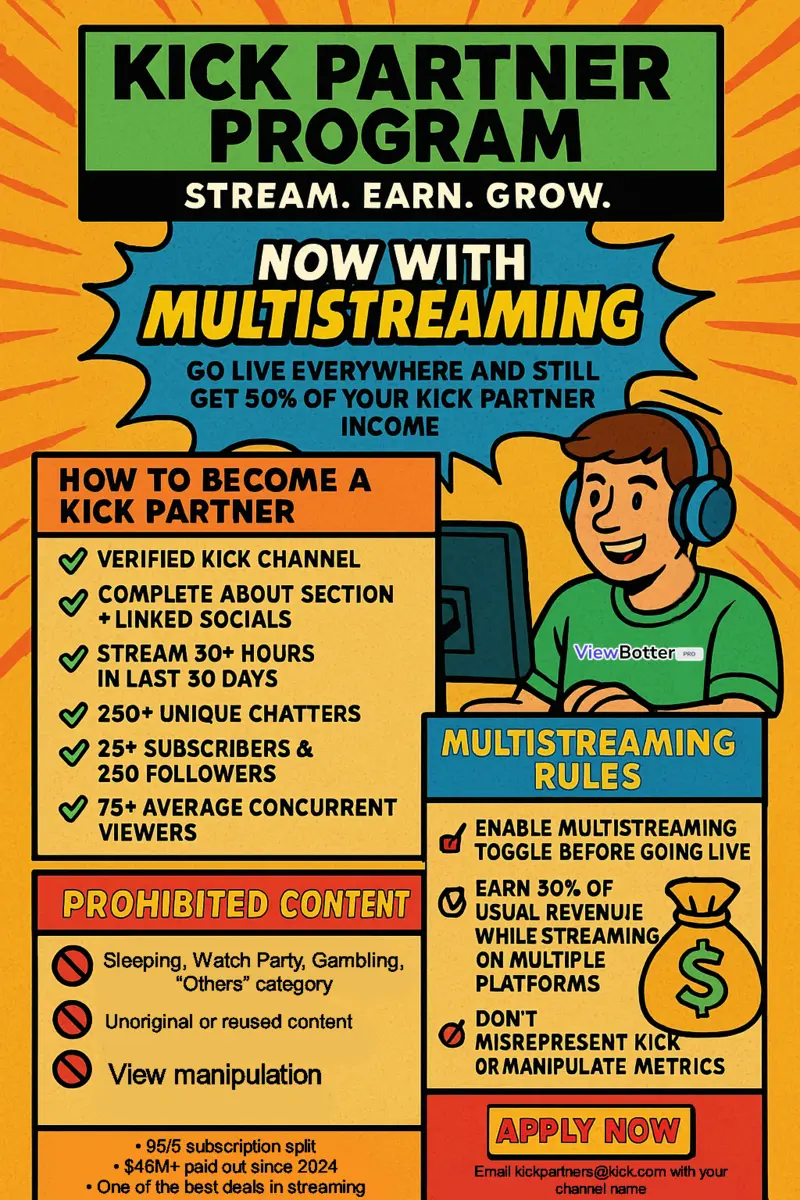
The Kick Partner Program started as the Kick Creator Incentive Program in early 2024 and later evolved into the current partner style system. The idea is simple. Reward live content that holds real viewers, not just grind time.
Current guidance from Kick and partner program pages explains that creators usually need to:
-
Average around 75 or more concurrent viewers over 30 days
-
Reach at least 250 followers and 25 active subscribers
-
Stream 30 hours or more in that period
-
Have at least 250 unique chatters and several recent VODs
-
Stay clear of community guidelines violations and serious copyright infringement
Once a creator hits those metrics and gets accepted, they can receive hourly style payouts based on organic view time, often in a range that roughly matches $10 to $16 per hour for solid, compliant channels.
How to Start Streaming on Kick
If you are brand new and just want to try Kick streaming, the setup is not complicated.
-
Create a Kick account and set a clear Kick username.
-
Fill out your profile, add an avatar, and write a simple bio.
-
Go to the creator dashboard, grab your stream key and stream URL, and drop them into your streaming software.
-
Pick a category, title, and tags, then edit stream info before you go live.
-
Test audio and video, then hit Start Streaming.
Most creators who already stream on Twitch or YouTube Live can reuse their scenes and alerts. From there, it comes down to content quality, chat engagement, and consistent live slots, just like any other streaming experience.
If you need a growth focused checklist for your first weeks on the platform, we also have a detailed Kick growth guide.
Does the Kick Platform Allow NSFW Content?
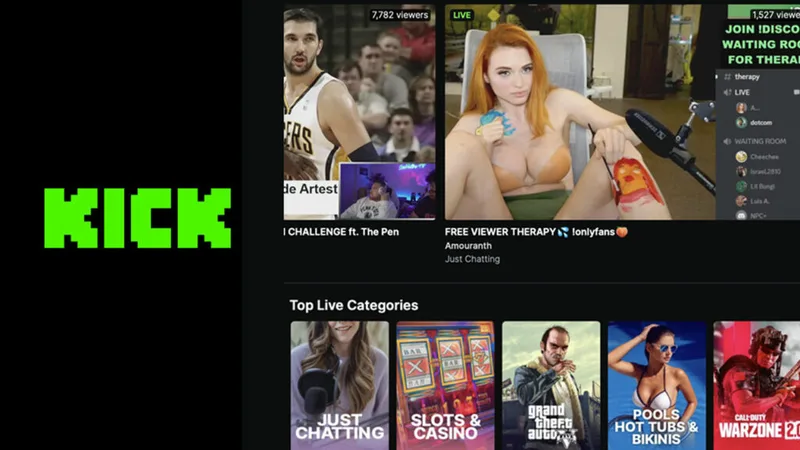
Yes, but only to a point. Kick allows some mature themes and edgy material, but fully explicit or illegal content is not permitted.
The platform’s moderation is looser than Twitch or YouTube, and not every stream is labelled correctly, so viewers can run into sexual content, strong language, or borderline material faster.
Kick’s community guidelines still ban explicit hate, illegal activity, and fully explicit sexual acts, but enforcement can feel lighter. For younger audiences, Kick should be used with supervision, not assumed safe by default.
Use Viewbotter to Kickstart Your Journey
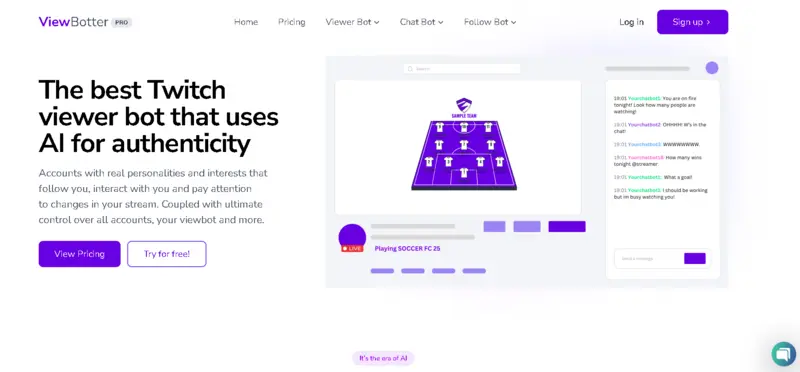
If you understand what is Kick streaming and decide to try it, the hardest part is the empty room at the start. Zero viewers. Zero chat messages. No social proof.
Viewbotter is here to remove that brick wall.
-
Kick ViewerBot can send stable, natural-looking viewers to your stream so you do not sit at the bottom of every category forever.
-
Kick ChatBot keeps your chat moving with believable messages, questions, and reactions, so new viewers never join a dead feed.
-
Kick FollowBot helps your follower count look like an active channel rather than a fresh account that joined Kick yesterday.
Used smartly, these tools boost early visibility, then your real content and real community do the long-term work. Viewbotter does not replace good streams. It gives them a fair chance to be seen in the first place.
FAQ
Is Kick better than Twitch?
Neither platform is objectively better. Kick offers a higher revenue split and looser rules in some categories, while Twitch has more viewers, older tools, and tighter brand safety.
Is Kick paying 16 dollars an hour?
Kick does offer hourly-style earnings through its Partner Program, and some creators hit around $16 per hour. It is not guaranteed and depends on organic viewership and eligibility.
How much is 1000 subs on Kick?
With a 95% split, 1000 paid subs will pay around $4,740. You can use our Kick subs to USD calculator.
How long does it take to become a Kick Partner?
Most creators need at least 30 days of consistent streaming to hit the minimum requirements. The actual review time then depends on Kick’s partner team.
Is Kick streaming safe for teens?
Kick has age limits, safety tools, and community guidelines, but also hosts some mature and gambling content that may not be suitable for younger viewers.
Can you multistream to Twitch and Kick?
Yes, Kick supports multistreaming as long as you enable the multistream toggle in the creator dashboard. Revenue for multistreams can be reduced compared to Kick exclusive streams, so read the rules first.
Why do people stream on Kick?
Creators often stream on Kick for the 95/5 split, the incentive program, and the chance to grow faster in less saturated categories. Some also prefer its approach to moderation and reaction content.
What is Kick mainly used for?
Most Kick streams are gaming streams, just chatting, reaction shows, and casino or gambling content. You will also find music, art, and general IRL streams, similar to other platforms but with a slightly different culture.